
The context.
The operation had already gone live on SAP EWM under a previous team. It was not standing up. The single most fundamental requirement of a scanning warehouse, the ability to scan, was failing on the floor. A warehouse that cannot reliably read a barcode at the dock cannot run, and every unread label became a manual workaround that ate labour and confidence.
By the time Luminar was brought in, the business had already spent heavily and the relationship with the original team had broken down. We were engaged after go-live, not as the build team. The brief was narrow and honest: stabilise the operation, find out what was actually wrong, and give the business a path forward it could trust.
The diagnosis.
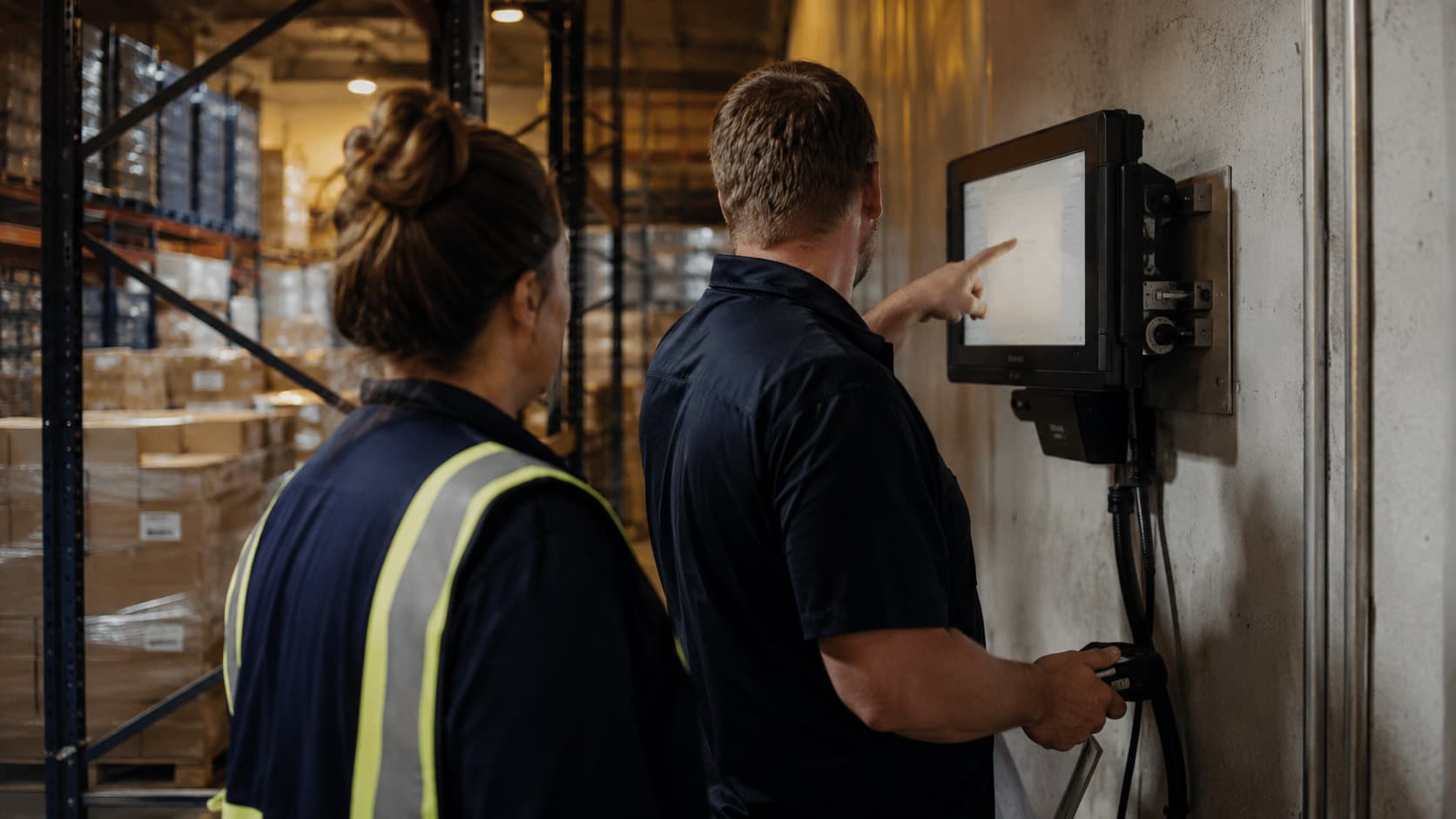
The scanning failure was not one fault, it was several stacked on top of each other. The barcodes themselves had been printed to the wrong symbology, not the GS1 Code 128 standard the operation required, so the makeup of the barcode was incorrect before a scanner ever saw it. The hardware had been procured tethered to fixed points rather than matched to the way operators move on the floor. And a reflective cover had been placed over the labels, so even a correctly configured scanner pointed at the barcode would not get a clean read.
The result was familiar to anyone who has stood on a struggling floor: an operator hovering, reversing, hovering again, and eventually getting a lucky read. Multiply that across every handling unit and the throughput maths stops working.
The intervention.
We ran 90 days of on-site support and operational excellence guidance. Because the team carried real warehouse experience, we were able to support the entire operation from day one, with none of the usual ramp-up where a new team spends weeks learning the floor before it can make a decision. We corrected the symbology and the label presentation, matched the scanning approach to how operators actually work, and removed the workarounds that had grown up around the broken reads.
The outcome.
- The floor could scan reliably, removing the manual workarounds that had built up since go-live.
- Scalability improved by roughly seventy per cent as throughput stopped being gated by failed reads.
- The business had a clear, costed path forward defined in under 90 days.
- Senior consultants were productive in the operation from day one, not after a multi-week uptake.
What this case proves about how we work.
A rescue is not a full implementation and does not carry all the same bells and whistles. We did not own the original go-live and we will not claim it. What we owned was the recovery: a fast, honest diagnosis of why the floor could not scan, and a path forward the business could act on. That is why a senior, floor-first EWM voice exists. Plenty of teams know a lot about a little. Far fewer have the whole recipe.