

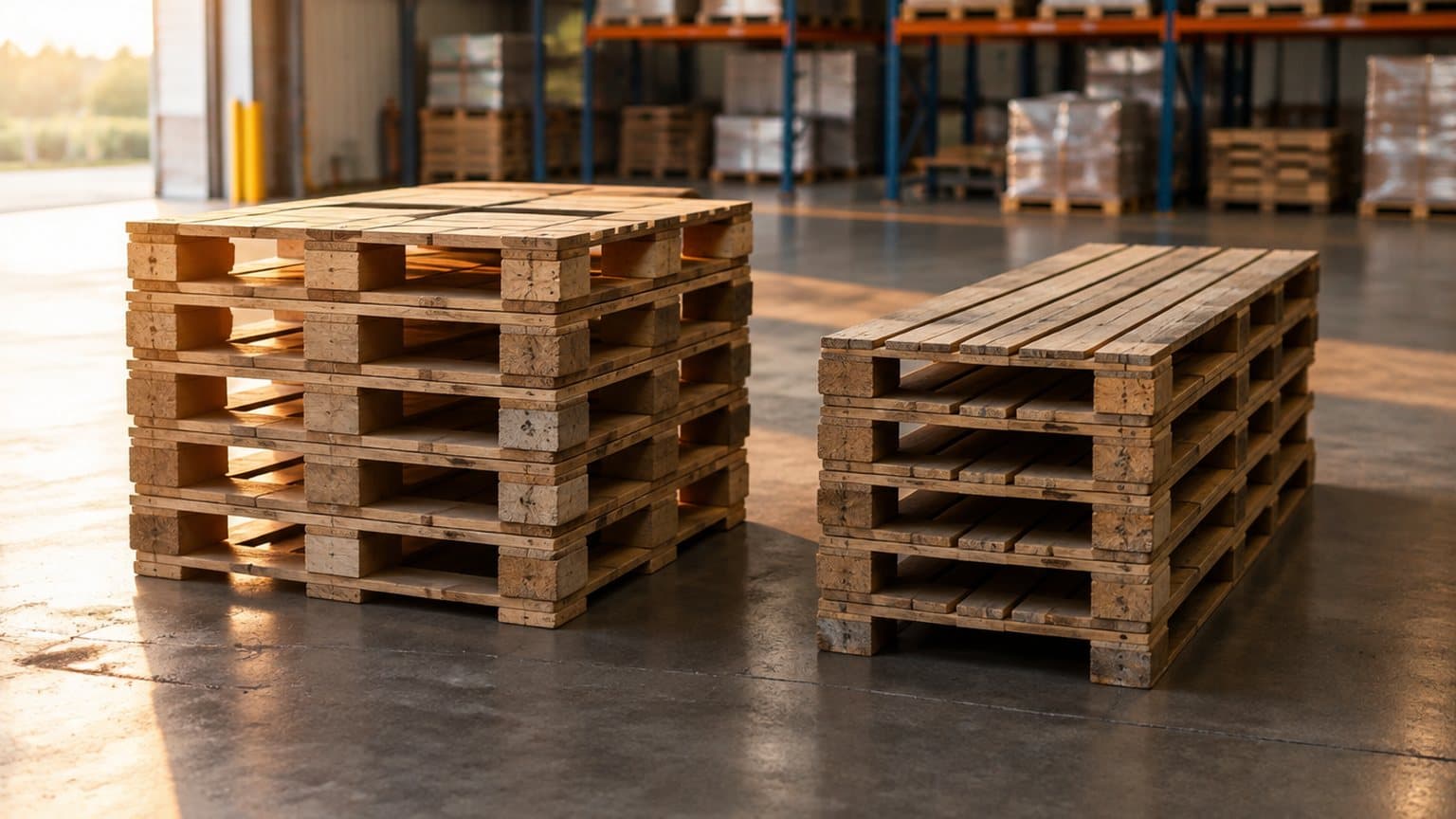
When a group template lands in Australia, the instinct on both sides is to argue about the big design questions. Storage type strategy, wave logic, RF flow. Those are usually fine. The trouble tends to come from small, physical or calendar facts that nobody thought to write down because, at the origin site, they were simply how the world worked. Our global template hub covers the wider rollout; this note is the Australian checklist.
The general idea, that a template encodes the floor it was first built for, is in global template, local floor. Here we get specific. Seven things, each framed as something to check, with the EWM object it touches. We have left out anything we are not sure of.
First, the fair point.
A European template is usually right about most things. A picking strategy that works in Rotterdam works in Dandenong. Handling units are handling units. If you walk into fit-gap expecting the template to be wrong, you will fight over preferences and lose the argument that matters. The aim is the opposite: accept the template by default, and test a short list of places where the origin site could not have known about yours. Do it early, while a change is a design decision and not a defect.
The seven checks.
1. Pallet footprint
The Australian standard pallet is 1165 x 1165 mm. The Euro pallet is 1200 x 800 mm. They are not close, and a template designed around the second will carry that shape in places you may not look first.
Check bin dimensions and capacity checks, because a bin sized for a rectangle may hold fewer square pallets than the numbers imply, or more, depending on how the racking was built. Check the handling unit types and packaging material types, which carry dimensions and weights. Check packaging specifications, put-away strategies that choose a bin type by pallet size, and truck loading, where the number of pallets that fit on a trailer changes with the footprint. A site that handles both pallet types, because imported goods arrive on Euro pallets, needs the template to cope with both, not just swap one for the other.
2. Time
Australia has several time zones, and the states do not agree on daylight saving. Queensland, the Northern Territory and Western Australia do not observe it. The rest do. So the gap between two of your sites can change twice a year, and the gap to head office in Europe changes too.
Check the time zone setting on each warehouse, and whether the template assumes one zone for the whole group. Check shift start and wave release times, carrier cut-offs that shift when a state changes its clocks and a neighbour does not, and interstate dispatch, where a truck leaves in one zone and arrives in another. A cut-off that holds in one half of the year can sit an hour out in the other half for the same lane.
3. Seasons and the calendar
The Christmas peak falls in summer, which affects labour, heat in the building and carrier capacity. The financial year ends on 30 June, so stocktake and reporting land in a different part of the year than in a template built around a calendar-year close. Public holidays vary by state, so a national holiday list is never quite right.
Check the factory calendars, and whether the template offers one per state or one for the country. Check wave planning around peak and around holiday weekends that fall on different dates in different states. Check physical inventory timing, since a count scheduled for a quiet European January may collide with an Australian summer peak, and the year-end count belongs around 30 June, not in a December close.
4. Dangerous goods storage and segregation
Storage and segregation of dangerous goods is governed here by state work health and safety regulation. A template written for another regime segregates by that regime's logic, and may barely model the local one. Check the relevant state regulator for your sites, and the Australian Standards that apply, such as AS 3833 for the storage and handling of mixed classes of dangerous goods in packages.
In EWM terms this lands on storage types, storage sections and put-away rules: which classes may sit in the same section, which need distance or a separate store, and what the put-away strategy refuses to do. This is a place to bring your safety adviser into the workshop. It is not legal advice from us; it is a prompt to confirm the rules with the people who own them.
5. Road transport
Heavy vehicle mass and load restraint rules apply, and under the Heavy Vehicle National Law in most states, Chain of Responsibility duties reach beyond the driver to those who load and schedule. Western Australia and the Northern Territory run their own regimes. Check what applies in the states you operate in.
The EWM objects are loading, the weights held in master data, and shipping. If product weights and handling unit weights are loose, or a load is built without regard to mass limits, the dock will find out before the system does. Ask whether the template lets you see a planned load weight before the truck is loaded, and who is accountable for it when it is not.
6. Labour
Shift patterns here are shaped by awards and enterprise agreements, and many sites lean on casual labour that swings at peak. A template designed for a stable two-shift roster with permanent staff will not fit a floor that brings in a wave of casuals every peak.
Check resource and queue design, which decides who can be sent what, and how quickly a new starter can be put into the system. Check labour reporting, because the measures the template ships with may not match how your agreements define breaks, overtime or shift length. The note on labour drift shows what happens when that is left to settle on its own.
7. Distance and inbound
Distance shapes the supply chain here. Lead times are long, and a great deal of stock arrives as imported goods in containers, which are often unpacked by hand. A template designed for a network of short road hauls from nearby suppliers may treat inbound as a small, steady stream of palletised trucks.
Check receiving, and whether it copes with a container of loose cartons as well as a pallet. Check deconsolidation, where a mixed delivery is split into the right stock for the right place. Check the yard, since containers wait for unpacking and the dock queue behaves differently. A site that receives mostly by container will stress these steps well before it stresses the put-away design.
A template can be right about everything except the pallet, the clock and the calendar, and still fail on all three.
How to run the checks.
Put the seven items on the fit-gap agenda as questions, not requests. Each gets one of three answers: the template already handles it, it handles it with a setting, or it needs a design decision. Most will fall in the first two. The few in the third are the ones to take to the build team early, with the physical or legal reason stated in plain terms. I have listed the paperwork worth asking for in what an Australian site should ask of a global template.
Walk the floor while you do it. Measure a pallet. Look at the label on a dangerous goods store. Ask what time the last truck leaves, and in which zone. Ask what happened in the last December peak. Those answers are cheap to get and expensive to discover in integration testing. If the same question turns up at several sites, say so; a fix that serves them all belongs in the template, and getting a local fix into the global template covers how to carry it there. For a rollout across many Australian sites, the APAC rollout case study shows the shape of that work.
How Luminar approaches the Australian fit.
We are independent, and we do not sell the build. That means we can tell you a European template needs very little changed, and we can say which two or three items do need a decision. A senior consultant spends a day on your floor, measures what the template assumes against what is there, and writes the answer in plain language with the trade-offs on the page. You get a memo in five working days, with no proposal attached, that you can take to your integrator or your template owner.