
The headline is well known in IT: mainstream maintenance for SAP ECC 6.0 on Enhancement Packs 0 to 5 already ended on 31 December 2025, and for EHP 6 to 8 it ends on 31 December 2027. Beyond that sits an optional extended maintenance window to 2030, on the latest packs only and at a surcharge of roughly 2% on maintenance fees, after which unmigrated systems drop to customer-specific maintenance. The move most large SAP customers are making in response is to S/4HANA. What gets far less attention in the boardroom is that the legacy warehouse module, SAP WM, does not carry forward as the strategic answer. SAP has signalled Extended Warehouse Management as the go-forward warehouse solution, and that turns a finance-led upgrade into a warehouse change whether anyone planned for it or not.
Why the floor is the risk, not the ledger.
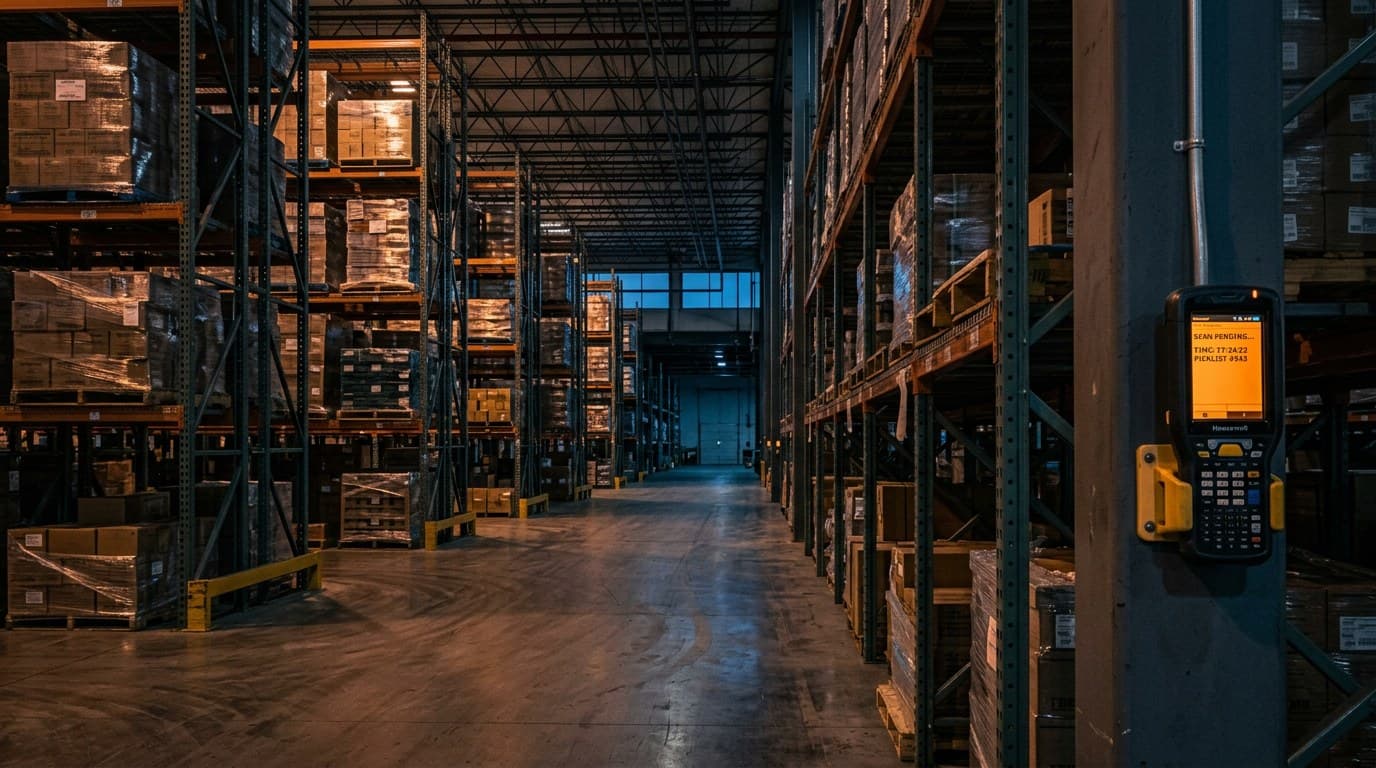
A finance migration is hard, but it is a controlled environment: known data, known users, a known cutover. A warehouse migration is not. It changes what every operator touches, how every shift opens, and how every pallet is recorded, in a live operation that has to keep dispatching while it changes underneath the people running it. The finance module does not down tools if the cutover wobbles. The warehouse does, and the customer notices the same day.
On most 2027-driven programmes, the warehouse is scoped as a downstream workstream under a finance-led programme. That is exactly the setup where the floor gets compressed: the timeline becomes the reporting metric, readiness becomes the line item that gets squeezed, and the execution leg is treated as configuration rather than operational change.
Greenfield or brownfield, for the warehouse.
The migration choice most people frame at the ERP level has a warehouse version that matters just as much. A greenfield EWM build is a chance to design the execution leg from a clean sheet, around how the operation actually runs today rather than how it ran when the old system was configured. A brownfield path preserves more but carries the old compromises forward, including the workarounds nobody has documented. Neither is automatically right. The point is to make that decision deliberately, for the floor, and not inherit it from the finance track.
What to do now.
The programmes being scoped in this budget cycle are the ones going live in the next two to three years. The cheapest time to protect the warehouse outcome is now, while it is still a business case rather than a hypercare crisis. Name the operational risks up front: master data, hardware, local team capability, and the gap between the group template and the local operation. Insist the warehouse has a senior voice in the room before the delivery model is locked, not after.
The 2027 clock is a finance headline with a warehouse bill attached. Plan the floor, or pay for it in hypercare.
How Luminar helps here.
We are the independent, local specialist that shapes the EWM position before delivery begins: the deployment approach, a requirements baseline grounded in how the floor runs, and an honest readiness view with the operational risks named early. We do not sell you the build, so the advice is about your operation, not a bench that needs filling. Whether the programme is greenfield or brownfield, we make sure the warehouse is not the workstream that quietly gets compressed on the way to a 2027 date.