
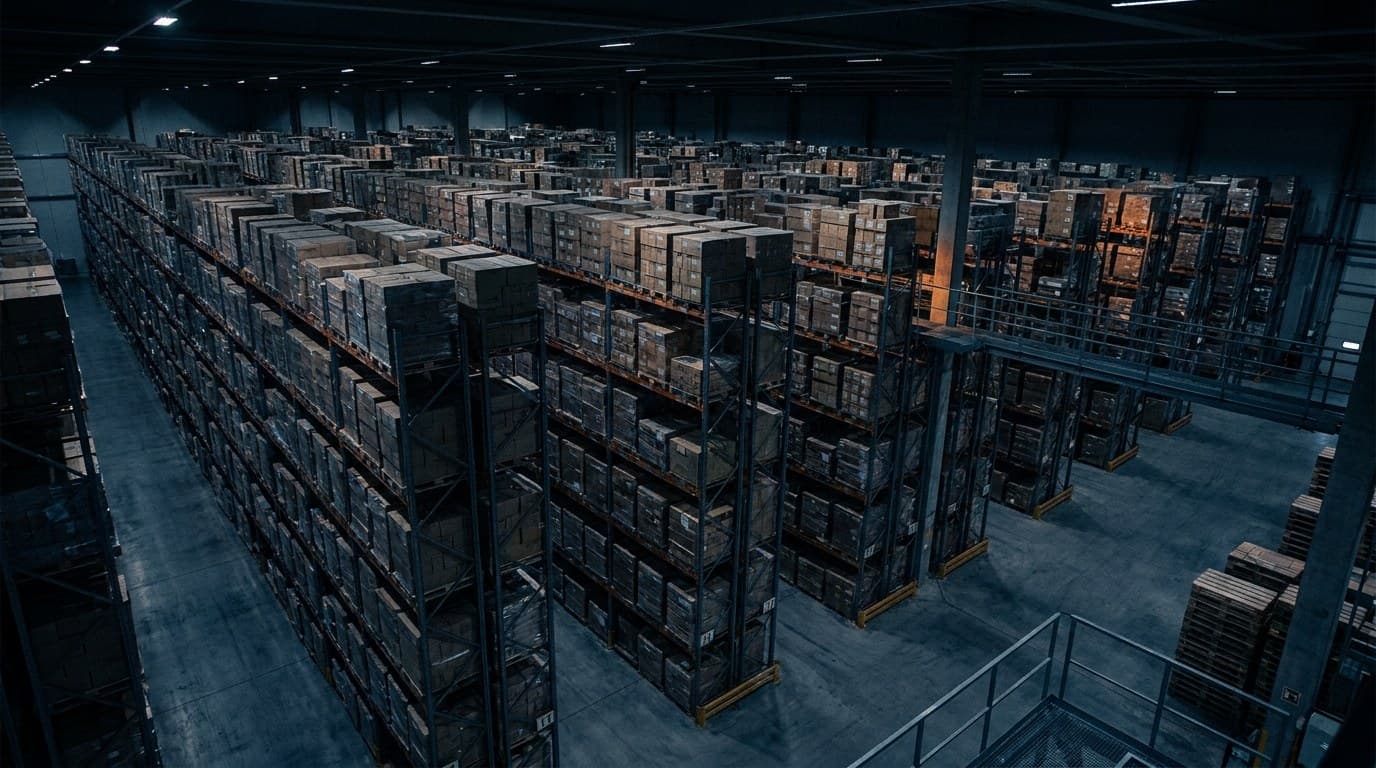
Almost every large operation already runs inventory management, usually inside SAP ERP. It knows the quantity of every material, its value, and the plant and storage location it belongs to. On a balance sheet that looks like control. On the floor it is closer to a rough address: the system knows the stock is somewhere in the building, and trusts a human to know the rest.
A warehouse management system is a different thing. It runs the physical operation: which bin, which handling unit, which pick path, which task goes to which operator on which device, in what order, right now. The gap between those two ideas is where labour cost, accuracy and damage quietly live, and it does not show up until scale forces it into the open.
The tell.
You are running inventory management as if it were a WMS if the symptoms below sound like your operation. None of them are fatal on their own. Together they are a real WMS conversation that is overdue.
- Stock reconciliation takes weeks, and never quite reconciles.
- You know you hold the quantity, but not how old it is or what rotates first.
- SAP ERP is in place, but the floor runs on spreadsheets and workarounds.
- DIFOT, stock visibility and damage are slipping as you grow.
- Only a handful of people actually know where things are, and the operation slows when they are away.
Why ERP inventory feels like enough, until it is not.
At low volume, a good team papers over the gap. Experienced operators carry the bin locations in their heads, the reconciliation is painful but survivable, and the spreadsheet in the corner is just how it has always been done. The inventory module is genuinely doing its job, which is accounting for stock, and everyone mistakes that for running the warehouse.
Scale removes the paper. More SKUs, more lines, higher throughput, more staff turnover, and suddenly the knowledge that lived in three people's heads cannot cover the floor. The reconciliation that took a day takes a fortnight. The damage that was rounding error becomes a line item. The lead time to the customer stretches. Nothing broke; you simply outgrew the tool without changing it.
What a real WMS actually adds.
A warehouse management system such as SAP EWM manages the operation at bin and handling-unit level, not just at material and storage location. It directs putaway rather than trusting the operator to choose. It sequences picks into paths instead of leaving the route to habit. It pushes tasks to RF devices and records every movement in real time, so the system and the floor agree on what is happening as it happens, not at the end of a shift. That real-time agreement is the whole point, and it is exactly what an inventory module cannot give you.
When you have outgrown inventory management.
The trigger is rarely a single event. It is the accumulation: the reconciliation window growing, the damage trending up, the DIFOT sliding, the dependence on a few key people hardening into risk. When the cost of the workarounds is bigger than the cost of the system would be, you have already outgrown inventory management. The expensive mistake is waiting until a peak season exposes it in front of a customer.
Knowing what you own is accounting. Knowing where it is, how old it is and who is touching it is a warehouse management system.
How Luminar reads this.
One day on your floor and we will tell you which position you are in, and what it would take to move. The Floor Audit is the cleanest starting point: a senior consultant, a day with your operations, and a plain-language findings memo inside five working days. No proposal attached. If a real WMS conversation is overdue, we will say so, and if it is not, we will say that too.